Showing posts with label drugs. Show all posts

Monday, November 14, 2011

“Why is marijuana needed when it is already available in pill form?

     "It", if referring to marijuana, is NOT available in pill form.  "It", if referring to THC - the main psychoactive compound in cannabis - is sold by prescription under the name *Marinol* (Dronabinol).  That may seem like a trivial point but we must keep in mind that THC and marijuana are not the same thing.
     Marijuana contains at least 66 active cannabinoids in addition to THC. Research has shown that these other compounds contribute significantly to marijuana’s therapeutic effects. For example, cannabidiol (CBD) has been shown to have anti-nausea, anti-anxiety, and anti-inflammatory actions, as well as the ability to protect nerve cells from many kinds of damage. CBD also moderates THC’s effects so patients are less likely to get excessively “high.” Other cannabinoids naturally contained in marijuana have also shown significant
therapeutic promise.
      Also, people who use the pill find that it commonly takes an hour or more to work, while vaporized or smoked marijuana takes effect almost instantaneously. They also find that the dose of THC they have absorbed (in the pill form) is often either too much or too little. Because slow and uneven absorption makes oral dosing of THC so difficult, The Lancet Neurology wrote in May 2003, “Oral administration is probably the least satisfactory route for cannabis.”  In its 2008 position paper on medical marijuana, the American College of Physicians noted, “Oral THC is slow in onset of action but produces more pronounced, and often unfavorable, psychoactive effects than those experienced with smoking.”
     Now let's consider those who use cannabis for its anti-nausea properties.  As Mark Kris, M.D., one member of an expert panel convened by the National Institutes of Health in 1997 to review the scientific data on medical marijuana, explained during the group’s discussion on February 20, 1997: “[T]he last thing that [patients] want is a pill when they are already nauseated or are in the act of throwing up.”
     Thousands of patients risk fines and/or jail time for using cannabis even though they could use a THC pill legally.  They obviously think it is worth the risk to use the whole plant versus merely one chemical from the plant.  It is time to legalize cannabis for medicinal use and stop punishing people for choosing a natural medicine for their ailments.

Thursday, November 3, 2011

"Don't Medical Marijuana Laws Subvert the FDA Drug Approval Process?"

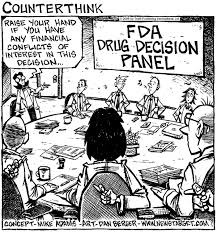
     Cannabis is NOT medicine. At least that is what the FDA would have you to believe from a *statement* released in April 2006.  The provided link in the previous sentence takes you right to the FDA website's archived copy of this said statement.  Let me pull a quote from it: "A past evaluation by several Department of Health and Human Services (HHS) agencies, including the Food and Drug Administration (FDA), Substance Abuse and Mental Health Services Administration (SAMHSA) and National Institute for Drug Abuse (NIDA), concluded that no sound scientific studies supported medical use of marijuana for treatment in the United States, and no animal or human data supported the safety or efficacy of marijuana for general medical use."  Here is another quote: "FDA is the sole Federal agency that approves drug products as safe and effective for intended indications. The Federal Food, Drug, and Cosmetic (FD&C) Act requires that new drugs be shown to be safe and effective for their intended use before being marketed in this country."  Let me show you why the FDA either (1) has no clue, (2) has a political agenda, or (3) a conflation of the two.  
     The FDA failed to use or cite any scientific studies that contradicted federal policy, such as the 1999 Institute of Medicine report.  That’s why IOM co-author Dr. John A. Benson told The New York Times that the government “loves to ignore our report ... They would rather it never happened."  The FDA statement was immediately denounced by health experts and newspaper editorial boards around the country as being political and unscientific.
     State medical marijuana laws do not have anything to do with the FDA in the slightest.  Those laws are in place to protect patients and caregivers from state and local criminal prosecution - not to decide for the public if cannabis is safe or recommended for medicine.  Besides, many Americans are already using substances that claim some sort of medicinal benefit in spite of the fact that they are labeled with this statement: "This statement has not been evaluated by the FDA. This product is not intended to diagnose, treat, cure, or prevent any disease."  The FDA does not bar Americans from growing, using, and possessing a wide variety of medical herbs that it has not approved as prescription drugs, including echinacea, ginseng, St. John’s Wort, and many others.
     There is already substantial evidence that marijuana is safe and effective for some patients, including new studies published after the FDA’s statement.  However, the federal government has blocked researchers from doing the specific types of studies that would be required for licensing, labeling, and marketing marijuana as a prescription drug. They've created a perfect Catch-22: Federal officials say “Marijuana isn't a medicine because the FDA hasn't approved it,” while making sure that the studies needed for FDA approval never happen.
     Marijuana was already on the market (in some two dozen preparations -such as tinctures and lozenges- many marketed by well-known pharmaceutical companies) before the 1938 Food, Drug, and Cosmetics Act was passed, creating the FDA. Under the terms of the Act, marijuana should not be considered a “new” drug, subject to the FDA drug-approval requirements that new drugs must meet. Many older drugs, including aspirin and morphine, were “grandfathered in” under this provision, without ever being submitted for new-drug approval by the FDA.  Marijuana didn't get a "fair shake" because it was all but outlawed by The Marijuana Tax Act of 1937.  I have other articles on my blog that go into more detail about that!
     Half of current prescriptions have never been declared safe and effective by the FDA. Between 40-60% of all drug prescriptions in this country are for drugs not approved by the FDA for the condition they’re being prescribed for - also known as "off-label". We know much more about marijuana’s safety and efficacy in cancer, AIDS, MS, and many other conditions than we know about most off-label prescriptions.
     The FDA is not infallible.  For instance, FDA-approved Vioxx is estimated to have caused between 26,000 and 55,000 needless deaths before it was taken off the market. And David Graham, associate director of the FDA’s Office of Drug Safety, has told Congress that the FDA is “virtually defenseless” against another Vioxx-type disaster. In contrast, 5,000 years of real world experience with marijuana show that it is safe and effective for many patients.  Are we not grown-up enough to make wise decisions for our own health and well-being -whether that be through using prescription drugs available on the market or self-medicating with an herb like echinacea or cannabis- or must we depend on the "guidance" of a select few who may not have our best interests in mind?

Wednesday, November 2, 2011

"Aren't There Other Drugs on the Market That Can Provide a Better Treatment Option?"

     With so many - I mean thousands - of drugs available for a myriad of ailments, why would someone choose to use cannabis?  Wouldn't it be better to just "stick to the stuff we know works"?   Can I stop asking questions on my blog and begin answering them?
     Consider all of the over-the-counter medicines for pain relief.  Aspirin, acetaminophen, ibuprofen, and ketoprofen to name a few.  Lump in the prescription medications as well (Celibrex, Vicodin, Percoset, and Oxycontin for example) and we have a large assortment of pain relief options.  Why not determine which one is best and ban the rest?  Different people respond differently to different medicines. The most effective drug for one person might not work at all for another person. That is why there are different drugs on the market to treat the same ailment. Treatment decisions should be made in doctors’ offices, not by federal bureaucrats. Doctors need to have numerous substances available in their therapeutic arsenals in order to meet the needs of a variety of patients. That’s why the Physicians’ Desk Reference comprises 3,000 pages of prescription drugs, rather than just one drug per symptom.  Because patients are different, doctors must have the freedom to choose what works best for a particular patient. Why use a double standard for cannabis?
     In addition, studies have found that cannabis can do a better job in the treatment of various problems than the "conventional" medicines available.  In previous posts, I have discussed cannabinoid response to issues like MRSA, brain tumors, uterine contractions, and cardiomyopathy.  I could go on but the point is made: are we as adults not capable of making right choices for ourselves when it comes to our well-being?

Tuesday, November 1, 2011

"Isn't Cannabis Too Dangerous of a Substance to be Used as Medicine?"

     A common misconception of those who oppose medicinal cannabis is that it does more harm than good.  This notion is bad for a few reasons.  Let us explore the truth of the safety and risks of using cannabis.
     Firstly, the health risks of cannabis have been exaggerated by people with an agenda.  See my numerous articles: *Cannabis versus Tobacco**Cannabis Kills Brain Cells*, and *Does Cannabis Make You Stupid?*  Numerous studies have shown that there is very little risk in the use of medical cannabis.  The American College of Physicians report that cannabis has a "relatively low toxicity."  The 1999 Institute of Medicine report claims, "the adverse effects of marijuana use are within the range of effects tolerated for other medications."
     Secondly, let's be reasonable here... Doctors can prescribe cocaine, methamphetamine, and morphine.  Who would dare say that cannabis carries a higher risk in use than those?
     Thirdly, all medicines have some side effects.  Many common prescription and OTC medications have caused severe physical and/or mental damage and death, yet we are not crying to see them pulled from the market and banned.  Tylenol, for instance, kills roughly 500 people a year from acute liver damage yet folks are still willing to take on the risk and consume it as the need arises.  Not one occurrence of marijuana poisoning has been recorded - EVER!  
     The question is this:  Do the benefits outweigh the risks?  We ask ourselves this question if we pop some Advils for a headache or if we undergo chemotherapy for cancer.  These are decisions made by doctors and patients - NOT the criminal justice system.  

Monday, October 31, 2011

"Doesn't Medical Cannabis Send the Wrong Message to Children?"

     Well, now that my break is over, I am ready to resume the blog.  Every now and then we need to take breaks, right?  Anyway,  I will be implementing some changes to my blog starting today.  For the foreseeable future, I have decided to focus primarily on medical cannabis education.  If there is pressing news on the political front or elsewhere, I will attempt to cover it.
     Today I present the first of many questions that people unfamiliar with medical cannabis ask those who support its use: "Supporting medical marijuana sends the wrong message to our kids, doesn't it?" Let me begin by citing the state-sponsored California Student Survey (CSS), which notes that marijuana use among teens rose annually until 1996 - then dropped significantly in subsequent years! By the way, 1996 was the year California'a Proposition 215 passed into law.  CSS researchers found that, "There is no evidence supporting that the passage of Proposition 215 increased marijuana use during this period." ( Skager, Rodney; Austin, Greg; and Wong, Mamie, “Marijuana Use and the Response to Proposition 215 Among California Youth, a Special Study From the California Student Substance Use Survey (Grades 7, 9, and 11) 1997-98.”)
This drop in teen usage has been consistent with the passage of compassionate-care laws in other states as well. ( O’Keefe, Karen et al., “Marijuana Use by Young People: The Impact of State Medical Marijuana Laws.” Marijuana Policy Project, June 2008)
     In addition to these findings, one has to ask himself, "What is really sending the wrong message: medical marijuana or the inconsistencies and hypocrisy of our current system of prohibition?"  Criminalizing sick and injured people for choosing their own health care by way of a natural plant is sending the wrong message to children.  Dishonesty by disseminating false "information" through PSAs and anti-marijuana campaigns is sending the wrong message to children.  Arguing that sick people should continue to suffer for the "children's sake" is sending the wrong message to children.
     Education is the right message for children.  They should be taught the difference between use and abuse.  The Physicians' Desk Reference (the industry standard in regards to FDA-approved drug information) includes over 1,100 of the most commonly prescribed drugs - NONE of which should be used for fun!  We do not teach our children to play with the pills found in a medicine cabinet.  Do you remember the time you first learned that cocaine was used in hospitals as an analgesic?  Did that cause confusion in your mind? Probably not.  Humans generally have the mental faculties to discern between good and bad uses of something.  I personally support gun ownership.  I also carry the responsibility to educate my children that guns are tools that can be used properly or improperly.  Why does society have a double-standard when it comes to cannabis?