Showing posts with label caregivers. Show all posts

Monday, November 14, 2011

“Why is marijuana needed when it is already available in pill form?

     "It", if referring to marijuana, is NOT available in pill form.  "It", if referring to THC - the main psychoactive compound in cannabis - is sold by prescription under the name *Marinol* (Dronabinol).  That may seem like a trivial point but we must keep in mind that THC and marijuana are not the same thing.
     Marijuana contains at least 66 active cannabinoids in addition to THC. Research has shown that these other compounds contribute significantly to marijuana’s therapeutic effects. For example, cannabidiol (CBD) has been shown to have anti-nausea, anti-anxiety, and anti-inflammatory actions, as well as the ability to protect nerve cells from many kinds of damage. CBD also moderates THC’s effects so patients are less likely to get excessively “high.” Other cannabinoids naturally contained in marijuana have also shown significant
therapeutic promise.
      Also, people who use the pill find that it commonly takes an hour or more to work, while vaporized or smoked marijuana takes effect almost instantaneously. They also find that the dose of THC they have absorbed (in the pill form) is often either too much or too little. Because slow and uneven absorption makes oral dosing of THC so difficult, The Lancet Neurology wrote in May 2003, “Oral administration is probably the least satisfactory route for cannabis.”  In its 2008 position paper on medical marijuana, the American College of Physicians noted, “Oral THC is slow in onset of action but produces more pronounced, and often unfavorable, psychoactive effects than those experienced with smoking.”
     Now let's consider those who use cannabis for its anti-nausea properties.  As Mark Kris, M.D., one member of an expert panel convened by the National Institutes of Health in 1997 to review the scientific data on medical marijuana, explained during the group’s discussion on February 20, 1997: “[T]he last thing that [patients] want is a pill when they are already nauseated or are in the act of throwing up.”
     Thousands of patients risk fines and/or jail time for using cannabis even though they could use a THC pill legally.  They obviously think it is worth the risk to use the whole plant versus merely one chemical from the plant.  It is time to legalize cannabis for medicinal use and stop punishing people for choosing a natural medicine for their ailments.

Monday, November 7, 2011

"Aren't the Medical Marijuana Bills and Initiatives Full of Loopholes Which Basically Legalize it for Anyone?"

     I have never been asked this question before.  Nope.  Opponents of medical cannabis don't ask this... they state it.  It typically sounds like this: "I voted against that marijuana initiative because you know anybody will be able to smoke it 'legally'."  We can't have that, can we?  Truth be told, people are going to eat, drink, and smoke what they want for the most part.  If a federal bill banning the consumption of fried starchy foods (like potato chips) - because of the cancer risks associated with acrylamide found in the foods - were to pass, people would still find a way to consume them.  Let's not kid ourselves.  The rate of cannabis usage doesn't go up merely because of state MMJ initiatives. How do I know?  Well, I personally can't vouch for that.  I enlist the help of studies!  In "Marijuana Use and the Response to Proposition 215 Among California Youth, a Special Study From the California Student Substance Use Survey (Grades 7, 9, and 11) 1997-1998", the researchers found NO increase in youth cannabis use despite the enactment of Proposition 215, the loosest of all the state initiatives.  Other state studies have comparable findings.
     Increase in legal patients can be contributed to an increase in public awareness and education concerning medical marijuana.  That is how I was introduced to it and I had never used it before it was made available medically.  Just because a state like Michigan has about 100.000 registered voters doesn't mean that there are too many people getting MMJ cards too easily.  Many people if given the opportunity would prefer to use a natural substance to treat ailments and chronic conditions without the harmful side effects of prescription drugs.  Sure, many patients were using prior to the passing of state bills.  That should attest to the fact that cannabis has worked for them and they are now wanting to take the legal route in getting their medication.
     In addition, it is just irresponsible to say that state initiatives have created an "open market" for cannabis use.  A person mast have an ailment that a licensed medical doctor believes is best treated with marijuana.  The General Accounting Office (the investigative arm of Congress, recently renamed the Government Accountability Office) interviewed officials from 37 law enforcement agencies in four states with medical marijuana laws. The key issue they examined was whether medical marijuana laws had interfered with enforcement of laws regarding non-medical use.  According to the GAO's findings, the majority of these officials "indicated that medical marijuana laws had had little impact on their law enforcement activities."  In California, the number of marijuana arrests has increased since passage of Prop. 215, totaling over 65,000 in 2004.  That hardly sounds like legalization, does it?
     If the state bills and initiatives are not perfect, they are still the best attempt to protect patients and physicians from punishment for using and recommending cannabis for medicine.  Currently in the U.S., about 99% of all cannabis arrests are on the state and local levels.  The remaining 1% of arrests (DEA, FBI, and Border Patrol) are manly focused on drug trafficking and large-scale operations.  Once federal law changes, we may see less of a need or no need at all for these state MMJ laws.

Thursday, November 3, 2011

"Don't Medical Marijuana Laws Subvert the FDA Drug Approval Process?"

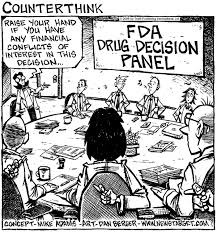
     Cannabis is NOT medicine. At least that is what the FDA would have you to believe from a *statement* released in April 2006.  The provided link in the previous sentence takes you right to the FDA website's archived copy of this said statement.  Let me pull a quote from it: "A past evaluation by several Department of Health and Human Services (HHS) agencies, including the Food and Drug Administration (FDA), Substance Abuse and Mental Health Services Administration (SAMHSA) and National Institute for Drug Abuse (NIDA), concluded that no sound scientific studies supported medical use of marijuana for treatment in the United States, and no animal or human data supported the safety or efficacy of marijuana for general medical use."  Here is another quote: "FDA is the sole Federal agency that approves drug products as safe and effective for intended indications. The Federal Food, Drug, and Cosmetic (FD&C) Act requires that new drugs be shown to be safe and effective for their intended use before being marketed in this country."  Let me show you why the FDA either (1) has no clue, (2) has a political agenda, or (3) a conflation of the two.  
     The FDA failed to use or cite any scientific studies that contradicted federal policy, such as the 1999 Institute of Medicine report.  That’s why IOM co-author Dr. John A. Benson told The New York Times that the government “loves to ignore our report ... They would rather it never happened."  The FDA statement was immediately denounced by health experts and newspaper editorial boards around the country as being political and unscientific.
     State medical marijuana laws do not have anything to do with the FDA in the slightest.  Those laws are in place to protect patients and caregivers from state and local criminal prosecution - not to decide for the public if cannabis is safe or recommended for medicine.  Besides, many Americans are already using substances that claim some sort of medicinal benefit in spite of the fact that they are labeled with this statement: "This statement has not been evaluated by the FDA. This product is not intended to diagnose, treat, cure, or prevent any disease."  The FDA does not bar Americans from growing, using, and possessing a wide variety of medical herbs that it has not approved as prescription drugs, including echinacea, ginseng, St. John’s Wort, and many others.
     There is already substantial evidence that marijuana is safe and effective for some patients, including new studies published after the FDA’s statement.  However, the federal government has blocked researchers from doing the specific types of studies that would be required for licensing, labeling, and marketing marijuana as a prescription drug. They've created a perfect Catch-22: Federal officials say “Marijuana isn't a medicine because the FDA hasn't approved it,” while making sure that the studies needed for FDA approval never happen.
     Marijuana was already on the market (in some two dozen preparations -such as tinctures and lozenges- many marketed by well-known pharmaceutical companies) before the 1938 Food, Drug, and Cosmetics Act was passed, creating the FDA. Under the terms of the Act, marijuana should not be considered a “new” drug, subject to the FDA drug-approval requirements that new drugs must meet. Many older drugs, including aspirin and morphine, were “grandfathered in” under this provision, without ever being submitted for new-drug approval by the FDA.  Marijuana didn't get a "fair shake" because it was all but outlawed by The Marijuana Tax Act of 1937.  I have other articles on my blog that go into more detail about that!
     Half of current prescriptions have never been declared safe and effective by the FDA. Between 40-60% of all drug prescriptions in this country are for drugs not approved by the FDA for the condition they’re being prescribed for - also known as "off-label". We know much more about marijuana’s safety and efficacy in cancer, AIDS, MS, and many other conditions than we know about most off-label prescriptions.
     The FDA is not infallible.  For instance, FDA-approved Vioxx is estimated to have caused between 26,000 and 55,000 needless deaths before it was taken off the market. And David Graham, associate director of the FDA’s Office of Drug Safety, has told Congress that the FDA is “virtually defenseless” against another Vioxx-type disaster. In contrast, 5,000 years of real world experience with marijuana show that it is safe and effective for many patients.  Are we not grown-up enough to make wise decisions for our own health and well-being -whether that be through using prescription drugs available on the market or self-medicating with an herb like echinacea or cannabis- or must we depend on the "guidance" of a select few who may not have our best interests in mind?

Wednesday, November 2, 2011

"Aren't There Other Drugs on the Market That Can Provide a Better Treatment Option?"

     With so many - I mean thousands - of drugs available for a myriad of ailments, why would someone choose to use cannabis?  Wouldn't it be better to just "stick to the stuff we know works"?   Can I stop asking questions on my blog and begin answering them?
     Consider all of the over-the-counter medicines for pain relief.  Aspirin, acetaminophen, ibuprofen, and ketoprofen to name a few.  Lump in the prescription medications as well (Celibrex, Vicodin, Percoset, and Oxycontin for example) and we have a large assortment of pain relief options.  Why not determine which one is best and ban the rest?  Different people respond differently to different medicines. The most effective drug for one person might not work at all for another person. That is why there are different drugs on the market to treat the same ailment. Treatment decisions should be made in doctors’ offices, not by federal bureaucrats. Doctors need to have numerous substances available in their therapeutic arsenals in order to meet the needs of a variety of patients. That’s why the Physicians’ Desk Reference comprises 3,000 pages of prescription drugs, rather than just one drug per symptom.  Because patients are different, doctors must have the freedom to choose what works best for a particular patient. Why use a double standard for cannabis?
     In addition, studies have found that cannabis can do a better job in the treatment of various problems than the "conventional" medicines available.  In previous posts, I have discussed cannabinoid response to issues like MRSA, brain tumors, uterine contractions, and cardiomyopathy.  I could go on but the point is made: are we as adults not capable of making right choices for ourselves when it comes to our well-being?

Wednesday, October 19, 2011

Thyroid Cancer Thwarted by Cannabinoid Receptor Stimulation

     With over 48,000 new cases of thyroid cancer expected this year in the U.S., it is very possible that you may know someone personally who has or will develop thyroid cancer.  Once again, I have come across another study of the positive effects of the endocannabinoid system and how it may be our "answer for cancer".  For those just tuning in to my blog, the *endocannabinoid system* was first discovered in 1988.  Since then ,scientists have been studying the various effects of this system in our bodies.
     In 2003,  Italian researchers at the Universita' di Napoli Federico II found that stimulation of cannabinoid receptors (in living rats with thyroid cancer) with an analog of anandamine (a cannabinoid found in us naturally and similar to THC) caused an interference with angiogenesis in thyroid tumors.  Angiogenesis is the formation of new blood vessels, which tumors need in order to grow.  In addition, the study found that the cannabinoid receptor (CB1) stimulation had a more potent effect on the tumors that had formed as a result of metastasis than primary thyroid tumors.  They concluded that CB1 stimulation may not only help prevent tumor growth but also mitigate the spread of the cancer to other tissues and organs.  Please click on this *link* for the abstract of the report
     My one comment for this is WHY DOES THE U.S. GOVERNMENT CONTINUE TO KEEP CANNABIS LISTED AS A SCHEDULE 1 DRUG??? It is absurd to think that cannabis has no medical benefit whatsoever and keep it on par with heroin and worse than crystal meth.  As long as it stays a Schedule 1 controlled substance it will remain banned from U.S. medical research.  Let us educate, for as long as the people remain in ignorance, the representatives in office will not make a change.

Tuesday, October 11, 2011

Breast Cancer Awareness Month - Are We Ready for a Cure Yet?


     I cannot go anywhere without seeing pink on someone or something... It's everywhere! From yogurt lids to NFL apparel, it seems that breast cancer awareness has become the "in thing". I do not necessarily have a problem with the pink - I just know that an answer to the problem has been discovered, but most "can't handle the truth" (thanks, Jack Nicholson!).
     *Cannabidiol* (CBD) has been found to induce apoptosis (programmed cell death) in cancerous cells. Many forms of cancer are a result of normal cells not dying on schedule. The typical healthy adult loses 50 - 70 billion cells each day from apoptosis. When certain body tissues fail to die, a malignant tumor develops. CBD stops the tumor in its tracks by encouraging the tumor cells to die - without adversely affecting healthy surrounding tissue. Chemotherapy and radiation cannot claim that!
     It has been brought to my attention that CBD's role in fighting cancer does not stop there. In a *2007 study* at the California Pacific Medical Center Research Institute, scientists have discovered that CBD inhibits the function of a gene called Id-1, believed to be responsible for metastasis of breast cancer (as well as other common forms of cancer). Metastasis is the spread of disease from one location in the body to another. Breast cancer can become lethal when it spreads to the lymph nodes or other organs and tissue.  This breakthrough in cancer research is astounding, but most will not benefit from this because of current government regulations on cannabis.  
     Support the fight for breast cancer - support the legalization of cannabis!  When will we wake up to the truth?

Monday, October 10, 2011

Should Christians Smoke Medical Marijuana?

From Christianity Today (June 2011):

     Ah, those Californians—a bunch of grown-up hippies single-handedly keeping medical marijuana in the national consciousness. But wait. My wife and most of her family are from California, and they all seem surprisingly normal. Maybe medical marijuana is worth a careful Biblical look. Scripture raises important questions.
     First, is it moral? This is the most important question. Does Scripture prohibit or command using marijuana for medical purposes? If something is illegal, unless Scripture commands us to do it, we do not. Where medical marijuana is legal, this is no longer an issue.
     Second, are mind-altering drugs sinful? This one is a bit more slippery. Many prescription drugs—like psychiatric drugs—can be mind-altering, and so are legal drugs such as tobacco and alcohol. Christians have reasonable arguments on both sides. But I think we can agree that one's motivation is relevant. If someone puts their hope in mind-altering drugs, and these drugs become a way to turn away from the Lord, they are idolatrous and wrong. Even then, that does not mean that the person must stop taking the drugs. It means they must learn how to turn to the Lord in their troubles.
     Third, is it wise to smoke medical marijuana? This overlaps with the morality question. There are times when something is morally permissible, yet unwise. If you struggle with a desire for alcohol, it is permissible but unwise to work in a place where alcohol is served. With medical marijuana, that question could be reframed as, "Is it helpful or dangerous?" Are there deleterious consequences to this treatment? The brief answer, and I suspect there would be many heads nodding at this, is that every medical treatment has possible harmful side effects. In an era of full disclosure, many prescription warnings end, "Oh, and you might die too." When you line up modern pain relievers, marijuana looks quite tame. It is riskier than Tylenol but safer than Vicodin. The dangers ebb when the marijuana user is terminally ill, and Scripture supports palliative care for the dying (Prov. 31:6-7).
     Finally, is your conscience clear? Is it okay that people know you are taking medical marijuana? You do not have to announce it in front of the assembly, but you should not be ashamed if other people know. If your conscience bothers you, do not do it. For some people, the stumbling block might be that you smoke it. Put it in a pill form and use its technical name, and many consciences would probably be soothed.
     Many innovations have unwanted side effects. For example, the Internet is a purveyor of pornography. Yes, more people will use marijuana for non-medical reasons. People who would not cross the barrier between legal and illegal might be more prone to try something that is legal though restricted.
     How would I vote? Be wise and do not violate your conscience.

-Ed Welch is a counselor with the Christian Counseling and Educational Foundation and author of several books on addiction and mental illness
Note from the Cannaculturist:  Please leave a comment on your take of this article... Do Christians have an obligation to truth in regards to cannabis?  Does our modern society's understanding of cannabis (or lack of) play a factor in how a Christian handles the issue? What are your thoughts?

Monday, October 3, 2011

Cannabis Helps Mother With Cerebral Palsy

     When referencing cannabis for health benefits, I typically try to avoid hear-say or anecdotes. On this occasion however, I couldn't help myself. I didn't find any university study or clinical research in this area but would love to get feedback from my readers as to where I can find some. Anyway, here is a video that has been on YouTube for a while and, while I have no proof as to the legitimacy of this video, I have no reason to believe it is fake.  It is a sad state of affairs we live in when somebody needs to "break the law" to find relief for a debilitating condition.  Will our society get a clue?

     Please share this on Facebook!  My son deals with mild cerebral palsy in his right leg... I need all the help I can get in spreading awareness of CP and natural therapies like cannabis.

Saturday, October 1, 2011

Bud of the Week - Cannatonic (high CBD phenotype)

     Like *True Blueberry x O.G. Kush*, Cannatonic is a go-to strain for body pain relief without the head buzz common with most strains.  A 60i/40s hybrid (MK Ultra x G-13/Haze), this Cannatonic has almost equal levels of THC and CBD (approx. 7% each). I say "this" because I am referring to a phenotype that had a mutation resulting in the low THC levels.
     As far as growing is concerned, you can find a few YouTube videos posted by *tigerman1120*.  He has tracked the growth of this strain week-by-week. Cannatonic takes about 70 days but the results are worth the wait.
     The smell and taste both combine earthy with a little sweet.  The creeping high occurs probably do to the higher CBD.  Cannatonic is better for night use as it will have you body-relaxed and drowsy.  


Medicinal Uses: Chronic Pain, Body relief without mental intoxication, Insomnia, Muscle Spasms, Nausea, MS, Gastrointestinal Issues, Arthritis, Anorexia

Monday, September 26, 2011

Cannabidiol and Diabetic Cardiomyopathy

     I always love finding study after study of the positive health effects of cannabis.  One such study that I came across in the Journal of the American College of Cardiology shows that the leading non-psychoactive compound found in cannabis, cannabidiol (CBD), has been shown to reduce the harmful effects of diabetes-related heart conditions, including cardiac dysfunction and inflammation, fibrosis, and oxidative stress. See for yourself *here*.
Now, mind you, as of last year this was all pre-clinical findings.  What does that mean?  According to the study, mice with diabetic cardiomyopathy were used as well as actual human heart muscle tissue. Actual diabetic human testing has not yet occurred.
    For years people have found relief of their diabetic symptoms by using cannabis.  NORML's website highlights findings of cannabis and diabetes.  Here is a *link*.
     I am keeping it short and sweet today.  Please share this with friends and family that could benefit from these findings.

Friday, September 23, 2011

Bud of the Week - Cinderella 99

     Just like the fairy-tale princess of this bud's namesake, Cinderella 99 is a royal strain with humble beginnings. She is the ultimate by-product of the happenstance of a breeder visiting a coffeeshop in Amsterdam and finding a few seeds in a bud of Jack Herer.  The breeder, from the now-defunct Brothers Grimm, grew the seeds out and isolated one under the name "Princess". Princess' father was unidentified , but the sweet, pineapple aroma was appealing, so the breeder took Princess' brothers and pollinated them with a ShivaSkunk female.  The resulting seeds yielded males, which began the cubing process with Princess and the finished product was "Cinderella 99".
    Unfortunately, this generation is no longer available.  An F2 version was created with the attempt to keep the original traits of the F1 hybrid.  At this point, I will be referring to the F2 in this blog.
     Under 1000W lights, C 99 has yielded two ounces of finished product from 3 gallon soil grows.  The good news is this plant is only in flower for under 60 days.  C 99 can be a pain to manicure due to the abundance of fine leaves common to sativas.
     Be cautious when using this strain as the high is potent and has caught people off guard - even to the point of muscle twitching and paranoia!  The smell is strong of pineapple but the aftertaste has been described as chemical or burnt leaves.

Medicinal Uses: Chronic Pain, Cancer, Nausea, Depression, MS, Migraines 
   

Thursday, September 15, 2011

Cannabinoids vs. MRSA

      Methicillin-resistant Staphylococcus aureus (MRSA) kills about 20,000 people in hospitals in the U.S. each year.  MRSA is what some would call a "superbug" - Staph bacteria that have developed resistance to beta-lactam antibiotics (which include penicillins and cephalosporins).  These strains are a result of society's overuse and/or misuse of conventional antibiotics.
     We gotta love our cannabis-researching scientists!  In a joint effort between Italy's Universita del Piemonte Orientale and Britain's University of London, School of Pharmacy, five cannabinoids (cannabidiol [CBD], cannabichromene, cannabigerol, Δ9-tetrahydrocannabinol [that's THC, folks!], and cannabinol were found to show a "potent activity against a variety of (MRSA) strains". Here is a *link* to the study's abstract.
     Maybe you know of someone who is battling a nasty MRSA infection...  There is hope and help available.  God provided mankind with a wonderful healing herb that has been suppressed for decades by governments.  We need to take back our freedoms - and this is just one more reason why!
     

Monday, September 12, 2011

Mycorrhizae for Better Cannabis!

     Myco-what?  Many people who grow their own cannabis do not realize that they may be missing out on a great way to protect and strengthen their plants from the roots up.  Lo and behold, mycorrhizae!  *Mycorrhizae* are colonies of fungi symbiotically joined with root systems of plants - each providing unique benefits to the other.
     The picture here shows a root system of a seedling on the left prior to inoculation while the shot on the right shows the mycorrhizal symbiosis.  The fungi act as "webbing", allowing the plant to grab much more water and nutrients from the surrounding soil. The plant in return provides sugars as a food source for the fungi.
     Mycorrhizae provide protection to the symbiotic plant as well.  Scientists have found that mycorrhizal fungi provide superb soil remediation by guarding the plant roots from pollutants such as heavy metals and other inorganic toxins.  Plants are also more disease-resistant and handle environmental stresses such as drought much better.
     When shopping for mycorrhizal fungi, make sure you look for endomycorrhizae - NOT ectomycorrhizae.  This is important if you do not like spending money for nothing.  While "endos" actually bind internally with the plants roots, "ectos" do not.  Certain plant species only benefit from one or the other.  Cannabis has been found to only respond to the endomycorrhizae.
     I hope this can be a help to those trying to grow the best medicine possible.  The Internet is a great tool for further research.  Also, message me with further questions and I will be glad to answer them.

Friday, September 9, 2011

Bud of the Week - Blue Cheese

     Don't let the name fool you - this strain has nothing to do with the fungus-laden cultured dairy product that we associate with the name "blue cheese".  A popular strain among connoisseurs, Blue Cheese combines a delicious flavor with a decent yield of quantity and quality.
     An Indica-dominant hybrid, Blue Cheese is a result of an ideal phenotypical selection through over forty male Blueberry x Big Buddha Cheese strains.  The best male then was crossed with a female Big Buddha Cheese to give a plant that is predominantly cheese with a little blueberry.
     This strain can do well indoors or outdoors.  Due to the internodes being so close, this plant can be groomed for Sea of Green and will do well.  Yields of over 2 ounces of cured bud have been reported when proper pruning techniques have been implemented.
     Despite its Cheese-heavy genetics, Blue Cheese delivers mostly blueberry and vanilla flavor with a dank, woodsy undertone.  Also, for being mostly Indica, the euphoria is clear and functioning without the "couch-lock" feeling.  Blue Cheese is recommended for daytime use and has a decent potency to deliver the relief you need.

Medicinal Uses: Chronic Pain, Cancer, Muscle Spasms, Nausea, MS, Gastrointestinal Issues, Crohn's Disease, Arthritis 

Thursday, September 8, 2011

2011 MMMA Rally in Lansing

      It was an amazing scene... Thousands of people gathered on the front lawn of Michigan's Capitol Building, some holding signs while others clapped and cheered.  Many medical marijuana activist groups, including NORML, were represented.  Scores of unemployed dispensary workers were present to speak their minds.  On the front steps of the Capitol stood a few dozen protesters with a podium in front, giving different people the platform to rail against Bill Schuette or give praise to the medical research that has been done with cannabis.  I have included a few photos taken from my phone.  Enjoy!


Tuesday, August 30, 2011

Bud of the Week - White Rhino

     No need to run from this beast... White Rhino will have you glued to the sofa!  A strong indica hybrid, this strain will provide plenty of pain relief.  When looking for a strain to replace those nasty Vicodins or maybe to ease fibromyalgia, turn to White Rhino. The high THC content of this plant doesn't lend itself well to new patients - it will knock 'em on their butts!
     White Rhino is a shorter, stout strain that does well in Sea of Green, Screen of Green, and large pots (where the plant will bush out).  Even with no restrictions on the roots, White Rhino will not grow more than 6 feet.
     The combination of floral and fruity tones hit your palate well. A hashy, coughing aftertaste follows.


Medicinal Uses: Stress, Chronic Pain, Insomnia, Muscle Spasms, Nausea, MS, Gastrointestinal Issues, Arthritis 

Monday, August 29, 2011

Lumens and the Inverse Square Law

     Plants need light.  Unfortunately for growers, it is not quite that simple. The wattage needs to be perfect.  The timing of the lights has to be perfect.  The color spectrum must be perfect. And then there is something called a *lumen*
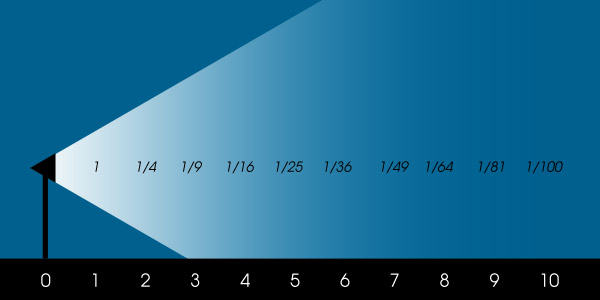
     The typical indoor cannabis grow room  requires about 50,000 lumens. In comparison, the sun gives off over 6.8 octillion lumens! that huge number is cut down to size when we consider the distance that the sun's light has to travel - 93 million miles. This leads me to the Inverse Square Law...  It goes something like this: as the distance is increased, the intensity is decreased by the inverse square of the distance. Huh?  Let me break it down. Let's say in our imaginary room, our light source is one foot away. This light is putting out 1,000 lumens. If I multiply the distance by two (now making it two feet away), I have decreased the light intensity by the inverted square of two - one-fourth. If I multiply my distance again by two (now putting me at four feet), my plants will only be receiving one-sixteenth of the original amount of lumens. Not cool. 
     Growers have been combating the effects of this law for years with reflective hoods on their bulbs and/or keeping the lights as close to the plants as possible - without frying them of course. Many growers paint their grow rooms white for added reflectivity.  I present to my blog readers an idea that may give more lumens for less money...  Turn your grow room ceiling into a giant reflective "wing"!
     A standard flat ceiling, even if coated with reflective material, doesn't give the optimal angles for light reflection. Going back to the Inverse Square Law, one should understand that the more times light bounces from one surface to another, the farther the light is traveling, creating a huge drop in the lumens.  With a curved, wing-like design, your grow room ceiling can angle the rays of lights from it to the plants in one reflective bounce instead of numerous bounces (from the ceiling to the adjacent wall, to the opposite wall, and finally hitting the plants).  With the right angles, your grow room could have the perceived brightness of a 1000 watt setup with only 600 watt bulbs... 
     The trick to getting the most out of the reflection is to think geometrically.  Using a standard flashlight (or better yet, a laser pointer) positioned where your grow lights will be, shine your light at your standard ceiling and notice how it reflects.  Construct a panel with plastic or cardboard covered with Mylar film and have someone hold it to the ceiling and adjust the angle of it - while shining your light on it - until the light is reflecting directly at the location of your plants. With some time and ingenuity, you could be capturing the "wasted" light and sending it straight to where it needs to be - on your plants and not on the walls!
     Now, back to the sun issue. If you grow outdoors, the Inverse Square Law doesn't play as huge of a role because the relative distance between heights on our planet and the overall distance form the sun is so great that the lumen differential is too minute to make a difference.  
     Although maybe a little too technical for some, I hope this can be a huge help for growers, newbies and veterans alike.  I certainly look forward to additional tips and tricks for growers in the upcoming weeks and months. I conclude with a reflectivity chart on various materials:
Reflectivity in %
- Reflective plastic sheet (Mylar) 90-95
- Gloss white paint 85-90
- Semi-gloss white paint 75-80
- Gloss yellow paint 70-80
- Aluminium foil 70-75
- Black paint less than 10


Thursday, August 25, 2011

I hope Bill Schuette is happy...

     As of Wednesday, August 24, it is now illegal to dispense medical cannabis in compassion centers and dispensaries in the state of Michigan.  The Michigan Court of Appeals ruled that the Michigan Medical Marihuana Act (MMMA) of 2008 does not give clearance for the sale of marijuana - even among medical marijuana cardholders.
     It is a travesty that Bill Schuette, our Attorney General, and multiple county prosecutors and law enforcement agencies throughout the state have joined together for what they believe is a fight for our security and protection. They think that the MMMA should have never been enacted and they are doing whatever they can to stop sick people from getting the help they need.  The recent decision by the three-judge panel to ban the sale and dispensing of cannabis probably has Schuette licking his chops.  I hope he doesn't get too excited however - we the people will not go down easily...
      I find it ridiculous that just when we gain some ground in the fight for liberty, the public officials come and snatch our freedoms away.  Whether you are a patient with a debilitating illness or just a concerned, freedom-loving citizen, please consider attending the next MMMA patient rally on September 7 at the Capitol in Lansing and show your support for liberty! If that is not possible, e-mail, snail-mail, or call the AG's office in Lansing and let Bill Schuette know that his employer- the electorate- will no longer stand for this act of tyranny:
Attorney General Bill Schuette
G. Mennen Williams Building, 7th Floor
525 W. Ottawa St.
P.O. Box 30212
Lansing, MI 48909
Main Number (517) 373-1110

Facsimile (517) 373-3042

miag@michigan.gov
Any comments for me are certainly welcome...

Wednesday, August 24, 2011

Bud of the Week - True Blueberry (DJ Short) x OG Kush

     Ask any given number of people what the main chemical component of cannabis is, and the overwhelming majority will say "THC". For years, delta-9 Tetrahydrocannabinol has been given the majority of attention due to its psychoactive effects. Many do not realize that there are over 80 discovered "cannabinoids" within the makeup of the cannabis plant - only THC having the mind-altering impact.  As scientists have begun to experiment with the different chemicals within this plant and horticulturists have bred and crossbred cannabis to create different strains, the cannabis community has been able to discover the varied benefits of the plant other than the "high".
     One example of these new developments is a strain called "True Blueberry (DJ Short) x OG Kush". As the name suggests, this strain is a cross between True Blueberry (50/50 strain) and OG Kush (Indica). With the goal of increasing the cannabidiol (CBD) content (over 12%) of the plant while reducing the THC (under 5%), this strain leaves a person's head clear while providing the pain relief sought after by many patients. A true "medical" strain, TB x OG also gives its users a wonderful palate, with a strong blueberry flavor and tones of cinnamon and vanilla.

Medicinal Uses: Chronic Pain, Body relief without mental intoxication, Insomnia, Muscle Spasms, Nausea, MS, Gastrointestinal Issues, Arthritis, Anorexia

Tuesday, August 23, 2011

Cannabis DOES kill brain cells!

     OOPS! I meant cancerous brain cells... I must get a rise out of intentionally misleading people... The title for today's post is true, but not in the fashion that most would infer.  Click *here* to read the abstract on a medical report from 2005 that explains how Delta 9 - THC and other cannabinoids destroy gliomas. What is a "glioma", you ask? Wikipedia defines a glioma as "a type of tumor that starts in the brain or spine."  If you are new to the world of cannabis, maybe I should take a step back and provide links for more understanding of *cannabinoids*  and our own body's *endocannabinoid system*.
     What I don't understand is how in 2003, The U.S.A.'s government as represented by the Department of Health and Human Services was awarded a patent on cannabinoids as antioxidants and neuroprotectants.  U.S. Patent 6630507. On the other hand, the U.S. government's own DEA still classifies cannabis as a Schedule 1 drug - meaning it has NO MEDICAL BENEFIT...  Do you see the problem with that???
     The human body was designed for cannabinoids! Maybe "Big Pharma" should stay out of politicians' pockets and allow a God-given herb to provide medical benefits to the masses... Oh, wait... That would mean the pharmaceutical industry would lose BILLIONS of dollars from the reduction in sales of many of their so-called "wonder-drugs".